Cutting Against the Grain
|
Cutting Against the Grain
Aditi Joshi
B.Sc. Economics (2025-2029)
Reading Time: 5-6 minutes
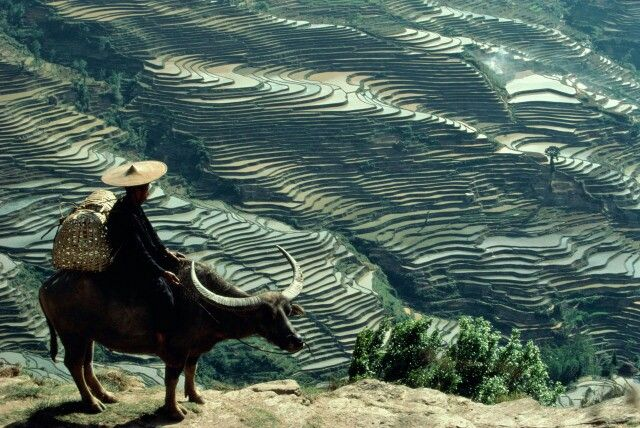
The Rice Theory of Culture, posited by Thomas Talhelm, argues that the functional requirements of traditional farming shape the social orientation of a population. A prerequisite for high-yield rice farming is a well-connected irrigation network, which necessitates collaborative labour to establish, a feat that no single nuclear family can achieve. As Caroline Blunden notes, the effective use of water historically required collective organisation. The necessity of building infrastructure as a community to guarantee a stable livelihood is what sets this theory into motion. Talhelm extends this logic to argue that these farming practices produce enduring cultural differences between regions. The theory extrapolates that paddy rice cultivation fosters interdependence (collectivism), while wheat farming encourages independence (individualism) within the agricultural communities. At its crux, the Rice Theory of Culture lets the grains do the talking, but have we been listening too closely?
Talhelm pinpoints three psychological markers of an interdependent mindset: lower self-inflation, stronger loyal or nepotistic tendencies, and a greater capacity for holistic thinking. Through sociogram-based experiments, he reports that these traits can be observed within a single generation. In one of the many experiments conducted to test this theory, Talhelm conducted a field experiment in which chairs were placed to partially block the entrance of Starbucks stores in northern and southern China. Customers in the north were more likely to move the chairs, while those in the south tended to squeeze past them. This was interpreted as evidence of independent versus interdependent cognition and used to bolster his hypothesis. Yet this behaviour is just as plausibly explained by situational norms and rule-following within a corporate space, making it a weak proxy for deep cultural psychology. While it is important to raise methodological doubts in the experiments, these concerns do not address the more significant issue at hand. The core problem lies in the unstable critical foundation of the theory itself, which limits its applicability.
After World War II, land reforms led by the Chinese Communist Party were carried out with the intention of dismantling old agrarian structures and replacing them with socialist collectivisation under strict party control. This resulted in people being assigned to these farms in a quasi-random manner as part of the reorganisation efforts. It was particularly advantageous to study the farms along the mighty Yellow River, which served as a rough boundary between rice-growing southern China and wheat-growing northern China. dismissing the fluctuations in personal bias to farm, geographic, and climatic conditions. A second study by Thomas Talhelm, known as the Ningxia study, examined farms in this very location. It was an ideal environment to test the theory’s validity, as otherwise uncontrollable variables such as biases, climate and geography were now constant.
It is here that the theory’s first major “plot hole” appears. Through his strive to choose the perfect environment to test the “general” applicability of the theory, Talhelm considers all but one powerful hidden variable: the state. The capacity of the CCP to reorganise labour, settlement, and production makes it not a background constant but a central force in shaping behaviour. As the former paper itself ironically concedes, “it might be more accurate to see interdependence as the product of rice plus a strong state.” Once this is acknowledged, the state ceases to be a control and becomes a confounder. The study never clarifies whether the state is a constant or a part of the mechanism itself, leaving the causal structure unresolved.
Further on, if we draw on the logic of Daron Acemoglu’s Nobel Prize–winning research in Why Nations Fail, one could argue that it is not the crop but the institutions managing the crop that dictate outcomes. Acemoglu’s work elucidates how inclusive or extractive institutions shape long-run economic and social trajectories. Regardless of ideological political intent, the push for certain types of crops can effectively lower the cost of monitoring and the inevitable bureaucratic enforcement by the state. Rice cultivation may not produce collectivism directly; its mechanics, involved in fostering collectivism, might make governance easier.
The study further weakens its bedrock by oversimplifying the “non-rice” category. Wheat is treated as representative of all dryland crops despite corn cultivation often being irrigation-dependent and labour-intensive in ways that resemble rice farming. Collapsing these distinct crops into a single control group reduces crop-based labour coordination to a single variable rather than a spectrum. If the need for coordination is the true driver of the observed psychological differences, then rice itself becomes increasingly difficult to isolate as the cause, since many other crops also require structured, collective labour. For example, populations in the Middle East, South America, and Russia rely on wheat or corn as staples but have been shown to display higher levels of holistic processing and collectivism than some other rice-growing populations.

Even after this seemingly polemical dissection, the Rice Theory of Culture deserves credit for attempting to map out the intricacies of culture as a whole. Culture rarely takes a straight path; it detours, collides and even reroutes through the course of history. It is an interplay between a blend of diverse manifestations of the infinite capabilities of the human mind. However, the apparent strength of the Rice Theory of Culture ultimately emerges from the vacuum in which it is tested. The Ningxia study isolates participants under geographically identical conditions, precisely the circumstances most likely to reproduce the theory’s predictions. In this sense, the experiment risks confirming what it is designed to find. Such tight control limits the theory’s applicability, for outside this narrow setting, agricultural practices are embedded in political systems, ecological constraints, and historical trajectories that no single variable can fully explain.