
Do Sports Still Sport Equality?
|
Do Sports Still Sport Equality?
Author: Mrunmayee Mainkar
BSC SY 2024-28
Estimated Reading Time ~ 5 minutes
Sports as a field has gone through a lot of evolution, be it clothes, training styles, equipment, etc. One notable change has been the inclusion of women in many sports, along with separate tournaments and leagues. Cricket, hockey, basketball, wrestling and all other sports which were traditionally masculine now include women who are actively and enthusiastically participating. We have many successful sportswomen who have motivated and inspired other women all over the world. That being said, we do need to evaluate – does equality in sports exist in actuality or rather as a concept?

The history of sports is quite interesting and complex, given the origin of various sports spread out across the globe. In India, sports date back all the way to the Vedic period, with sports such as chariot-racing, archery, wrestling, martial arts such as Kalaripayattu, etc. During the colonial era, we saw the introduction of sports like cricket, hockey, polo, billiards, badminton and so on, and eventually made hockey our national sport (ironic considering how obsessed we Indians are with cricket!). Greece gave birth to the Olympics, which till this date is one of the most famous sports events. Throughout the years, sport has gone from being something which people did for fun to being heavily commercialised and a billion-dollar industry, subsequently introducing sub-fields such as sports journalism, sports psychology, etc., which are just as relevant.
One noticeable thing I have observed about sports is that they seem to be designed by men, for men, while consciously or unconsciously keeping women away from them. An example that comes to my mind is the difference in the treatment of female college basketball players in the US. In 2021, a video went viral showing the difference between the locker rooms and training equipment for men and women, the women’s room being poorly equipped with weights as compared to the men’s room, which had sufficient gear. Although the National Collegiate Athletic Association issued an apology, it still shows that one is being prioritised over the other, even in this era. The NBA gets more hype than the WNBA. In the Indian context, men’s cricket is given more importance than women’s, be it IPL, T-20, ODIs, or the World Cup. This disparity has been quite evident in the pay gap as well, where men’s annual retainers are much higher than women’s. This has been so since historically cricket in India was played by men, along with more investments made in men’s cricket throughout the years, as compared to women’s cricket due to the gender bias.

Despite these issues, women have been quite enthusiastic in participating in various sports. Simone Biles, Serena Williams, Maria Sharapova, Mary Kom, P.V. Sindhu, and Sania Mirza are some examples of successful, world-class female athletes. These are extremely hard-working and talented women who have earned their spot in their sport. There is an increase in the representation of women in sports, as well as various competitions and tournaments. However, there are still major problems which exist. Harassment, sexual offences, sexism by coaches, team-owners and other unsavoury elements is a major issue. A major instance would be the Larry Nassar case, where Larry – an Olympic doctor of the US national team – was found to have abused over 100 girls, women and children, including Olympic athletes whom he was supposed to treat. One of the unfortunate victims was Simone Biles. In Assam, Mrinal Basumatary, an SAI swimming coach was arrested for allegedly sexually harassing minor girls enrolled in a training centre in Solalgaon.
Additionally, men’s sports get more funding, media coverage and press attention as compared to women’s. In some countries, stereotypes and gender discrimination play a role in the number of women wanting to become athletes because of the lack of adequate training facilities. On a side note, menstruation, pregnancy and female-specific health problems also act as barriers to the same, and many sports aren’t quite built for women to handle these biological issues. Although the difference isn’t much, many athletes’ report menstruation to have affected their performance in terms of speed, strength, awareness due to emotional and physical fatigue, stomach aches, hormonal changes etc. Athletes are also said to have irregular periods due to strict diets, extreme training, stress and other related factors. After pregnancy, female athletes could return back to their sports, but faced problems of balancing motherhood, exercise, diet and rigorous training, combined with the societal pressure of retiring/focusing fully on motherhood.
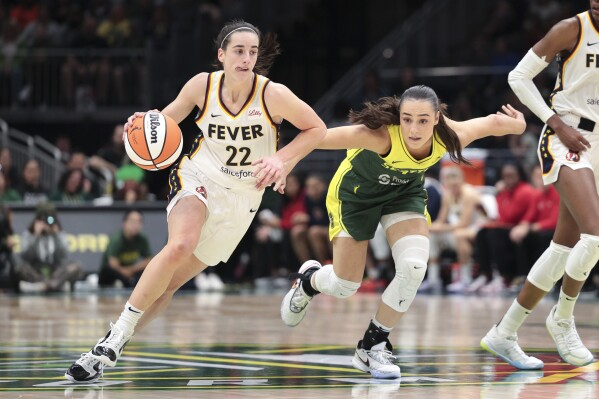
My verdict – sports do not sport equality yet. Yes, we definitely are in a much better spot than we were a decade ago, but there is a lot of room for improvement. Sure, improved sports facilities keeping in mind the differences in our physiognomy and a higher budget allocation would be immensely helpful, but what is really required is to eliminate prejudices against female athletes and to give them the space and the platform to grow. Coaches need to be educated in dealing with women athletes and taught to be respectful. Sports should be an unbiased field, where the experiences of both genders should be worthwhile, without one dominating or discriminating against the other. While changes are being made, serious evaluation of women’s sports is vital – not only for equality but also for the development of these fields and nations – given the issues being faced by women over many decades. Equality isn’t just about promoting women in everything or speaking about it, it is the availability of equal opportunities for everyone, regardless of gender, and it is just as important in sports as compared to any other field.