
Kids, it’s Time for the Daily Slop!
|
Kids, it’s Time for the Daily Slop!
Krishya Nema
B.Sc. Economics (SY)
Estimated Reading Time: 5 minutes

Source: Pinterest
For nearly two decades, the Mahatma Gandhi National Rural Employment Guarantee Act (MGNREGA) has served as the ultimate economic shock absorber for rural India, turning the “right to work” from a socialist ideal into a tangible lifeline for over 150 million households. It is a scheme of staggering proportions and contradictions: while it effectively cushioned the blow of a global pandemic and pioneered financial inclusion for rural women, it has simultaneously been haunted by the “ghosts” of bureaucratic delays and a widening digital divide. To understand MGNREGA today is to witness a high-stakes tug-of-war between its original mission as a safety net of last resort and a modernizing state’s push toward technocratic efficiency.
As we move into 2026, the scheme stands at its most significant crossroads since its inception in 2006. With the introduction of the Viksit Bharat–Guarantee for Rozgar and Ajeevika Mission (VB-G RAM G) in the latest Union Budget, the traditional framework of MGNREGA is being fundamentally re-engineered. This transition raises a critical, uncomfortable question: is the government evolving the scheme to meet the needs of a modern economy, or is the “demand-driven” heart of the program being replaced by a top-down, supply-led model? Critically assessing its implementation requires peeling back the layers of record-breaking participation figures to reveal the friction caused by mandatory biometric systems and the persistent struggle for wage parity in an inflationary world.
Pause.
Fun fact! Everything you’ve read so far was generated by Gemini, all 229 words. Did you notice? The whole process took less than a minute, from typing and sending the prompt, to receiving the output, and consequently pasting it into a google doc. This article, as you may have caught on now, isn’t about MGNREGA, I’m taking over now.
One of the first things we learn as students of economics is opportunity cost. Something I’ve always understood as the economic version of “regret.” The cost of the “next best thing,” what “could have been”, perhaps. Today I bring this up in the initial context of AI.
Artificial Intelligence, the world’s “next best thing,” no longer adds extra fingers to images of hands. In 2025 it passed the historic Turning Test. Its ability to write, think, comprehend, interpret, and “create” is improving. It is increasingly hard to disagree that AI gets the job done. From assignments and tasks at work, to pick-up lines and dinner recommendations, your common-use LLMs keep their customers happy. The question we must pose is, should it?
There is No Such Thing as a Free Lunch
A phrase we’ve all heard in Professor Ashish Kulkarni’s classes. A phrase I ask you to keep in mind while you’re here. I don’t see the need to reiterate what we already know: AI usage has unwelcome effects on human cognitive ability, especially students. Critical thinking, information retention, social skills, exposure to diverse thought, and writing ability all take a hit.
Just like warning labels on a pack of cigarettes, this knowledge does nothing to hinder us from transferring the load of menial labour to our favourite chatbot. In a world optimised for efficiency, we see no value to our labour when the opportunity cost seems so low. Each task is done so we can move on to the next. Pass the semester, get the degree, get the job, get the paycheck, and repeat? The gains from this efficiency are short-term.
End Prompt.
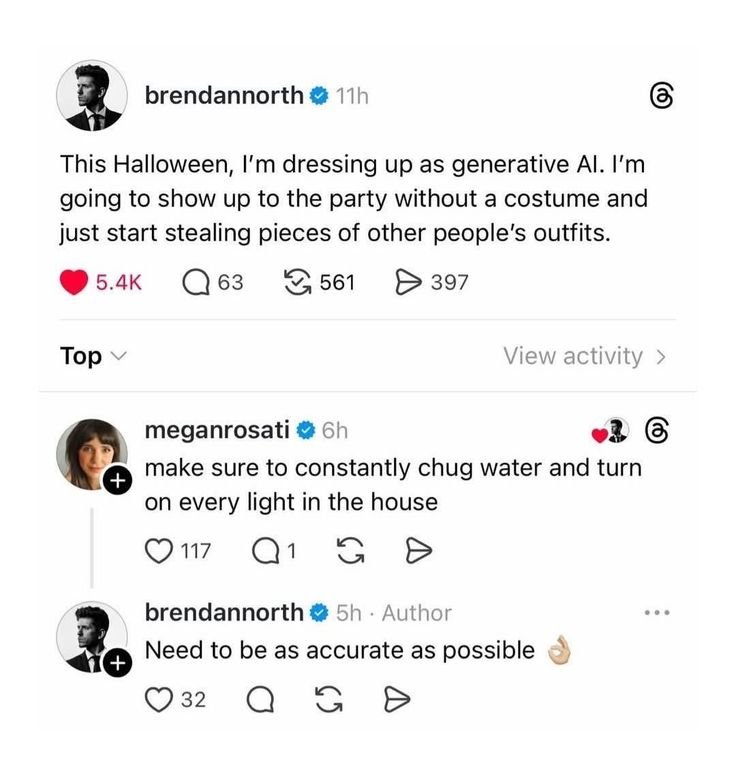
Artsmart.ai, an AI image generation platform tell us “Over 80% of social media content recommendations are powered by AI, significantly improving user retention rates.” Citing Saufter, an AI-powered customer engagement and marketing platform. Fun! In a September 2024 edition of the 8:10, AI was aptly described as “Scrapbooking Intelligence.” What I find ironic is that AI has learnt from humans who have taken the time to develop the way they think, write, and create. Yet, we see ourselves using it as a substitute for our own thinking, writing, and creating, as if we haven’t taught it everything it knows? In the words of my dear friend, “you use AI as a crutch for an arm that isn’t broken, and in the process, you let it rot.”
As I painstakingly do the labour of writing this article (the L in Krishya stands for LLM), I urge you to take similar labour, in small quantities, upon yourself. As we evaluate what tasks are worth our time and energy, let us remember there are limits to optimisation, ones we must maintain.
Source: Pinterest