
Right jab, left jab, poke in the eye, and boom!!!!
|
Right jab, left jab, poke in the eye, and boom!!!!
Rudraneel Sinha
FY B.Sc. (2025-2029)
Reading time: 4-5 minutes
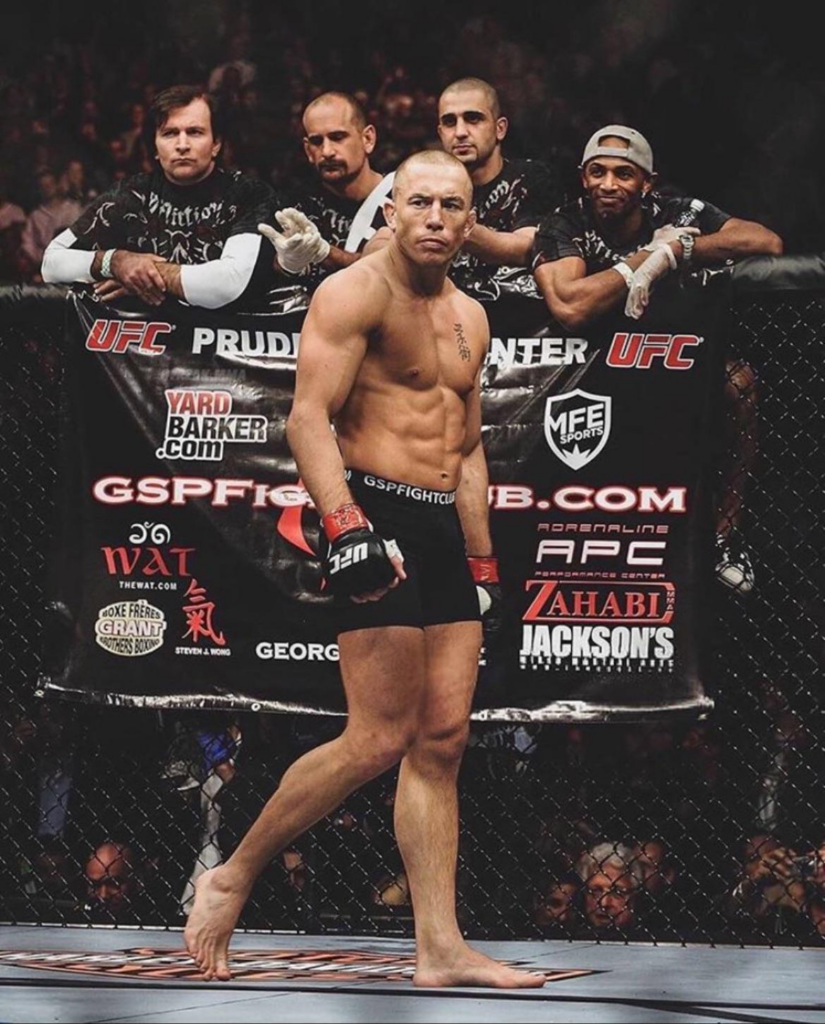
They used to call it “cockfighting,” and yes, I’m being serious. Just pure chaos and grown men throwing hands at each other. Back in 1993, someone had the idea of locking eight men with different fighting styles in a cage, and see who would make it out. The funny thing was that there were no rules, no judges, and no weight classes. Yes! No weight classes, a judo wrestler could fight a slim karate chap or a boxer. Bonkers, wasn’t it? The first event, UFC 1, was designed to answer a playground question: Can a wrestler beat a boxer? or, Can a karate master stop a sumo wrestler? Almost 30 years later, the UFC has transformed this unregulated chaos into something more meaningful and aspirational for many combat-sport athletes around the world. But this wasn’t always the case; the UFC had to face countless obstacles in its way to be where it is right now. Now, this aspect is very critical because when UFC was in a tough spot in 2001, it was acquired by casino moguls Frank and Lorenzo Fertitta, and Dana Pink, for just 2 million. The deal continues to fascinate me to this day- $2 million for a sport as chaotic as this almost feels like a reckless gamble. But nonetheless, this was instrumental in what was yet to unfold.
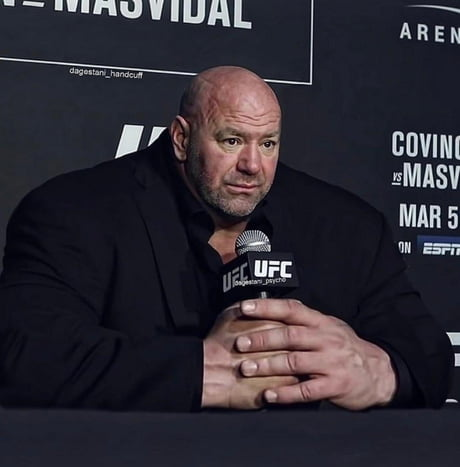
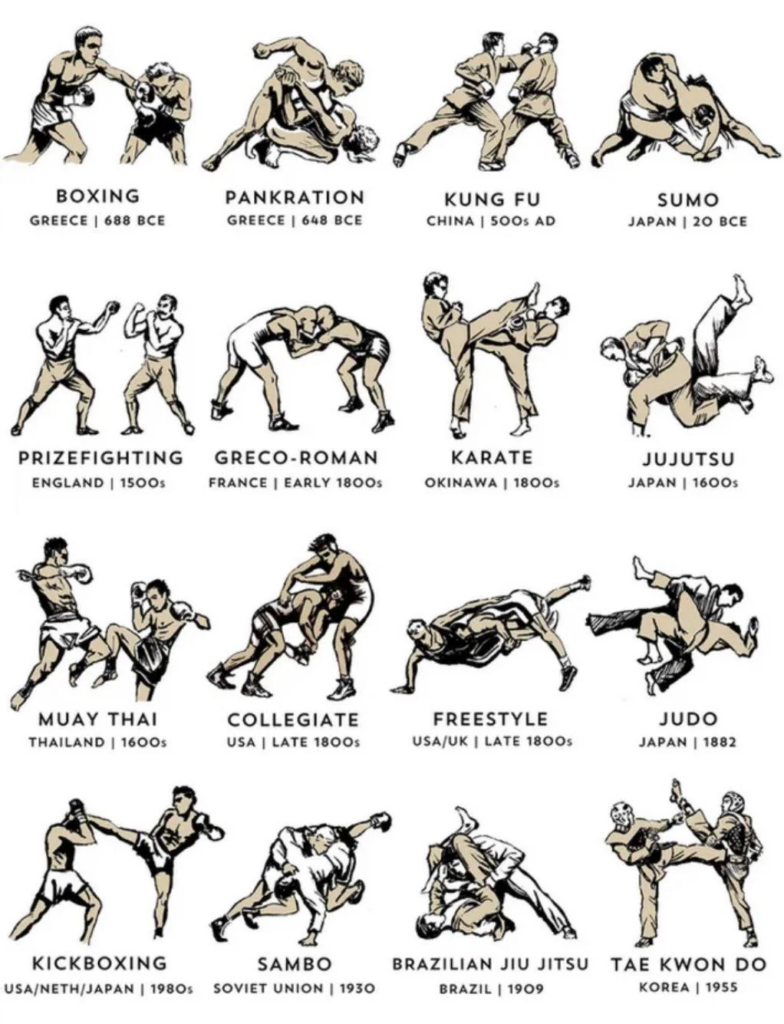
Now, when I say why this was instrumental, it’s because the deal involved moving towards regulation rather than going away from it, which played a vital role in revolutionizing the entire sport. The sport being operated without referees, judges and necessary equipment gave the MMA more scope for expansion. It became more about adaptability rather than sticking to one combat style because if you see at the very beginning the fighters sticked to one combat style but as new fighters started to come into they saw the potential in changing their strategies more specifically adding new combat styles into their pot of combat which is why i say it became more about adaptability rather than sticking to one combat style. Combat sports before the UFC came into existence didn’t consist of the mixing of the different combat styles, as people and other tournaments focused on their own respective combat styles. The “cockfight” era may have been chaotic, but it realised Bruce Lee’s vision of mixing various art forms to create something entirely new. Once the acquisition took place, the hybrid approach was adopted, scaled up and marketed to a massive new audience.
With the likes of BJ Penn, Matt Serra, and Roger Gracie using jiu-jitsu to win fights and dominate others, they showed the superiority of jiu-jitsu within MMA. But eventually, these specialists were overtaken by well-rounded athletes such as GSP (one of the most complete fighters of all time), Jon Jones, Islam Machachev, etc., and many more and this synthesis of striking, grappling, wrestling and submissions gave birth to the modern day MMA. In effect, the UFC forced combat sports into a Darwinian environment. Fighters had to cross-train, innovate, and continuously evolve to win and survive in a sport marked by ever-changing conditions. This broke down rigid stylistic silos that had existed for decades and replaced them with a holistic understanding of fighting. Today’s MMA athlete is not defined by a single background, but by adaptability, which is a direct legacy of the UFC’s competitive structure.
Furthermore, this gave rise to something even more distinct, reshaping training science.
Combat sports used to reward specialization where boxers box, wrestlers wrestle, and kickboxers kickbox, but the UFC changed it completely, wherein now the fighters had to excel everywhere. Athletes began incorporating strength and conditioning, sports psychology, nutrition, and data-driven performance analysis in their training regimen. Many MMA gyms evolved into multidisciplinary performance centers rather than style-specific dojos. The fighters now had to learn almost everything about every combat style in the world in order to adapt and win.Take Islam Makhachev for example- he mixes Russian Sambo with Wrestling and striking to dominate his opponents. This has helped him tenfold, considering he has lost only once in his entire MMA career. This is not only restricted to him because when you take the cases of Brock Lesnar, Charles Olivera, Illia Topuria, or even Conor McGregor, they also have adapted and evolved to be the fighters they are now. The UFC turned fighting into one of the most demanding hybrid sports.
Another thing you can look at is how safe the sport has become. Back in the day, there wasn’t any set of rules to govern the sport. Men fighting each other and hitting them in their balls or pulling out their hair, or even pinching at questionable places, and the most important part was the substance abuse. Some fighters still do it to this day, but we can most probably discuss it later. But the bottom line is the UFC made modern-day MMA safer by adding all the necessary things, such as certified referees, state-of-the-art equipment, infrastructure, gloves, and most importantly, a tie-up with USADA. Furthermore, with the adoption of the Unified Rules of Mixed Martial Arts in 2001, which introduced mandatory weight classes to ensure fair competition, time limits and rounds to prevent exhaustion-induced trauma, and the requirement of 4-6 oz gloves to protect a fighter’s hands and reduce cuts. All of this, including the Octagon-shaped cage along with the necessary specialists have made sure that MMA is safer than ever, and I say this with full confidence because there is a higher chance of a person dying in a boxing match than in a UFC fight. Sounds unbelievable, doesn’t it?
Apart from making it safe, the regulations did one more thing that helped revolutionize this new modern sport- its ability to globalize this sport in such a short amount of time. Now, when you go around the world, there are not just one but multiple combat styles coming out of different countries like Russian Sambo for Russia, Judo for Japan, Muay Thai from Thailand, Brazilian Jiu-jitsu and many more. This gave rise to multiple fighters specializing in their own country’s combat style, which the UFC capitalized on by recruiting them to fight in the UFC and by hosting events worldwide. This catapulted the UFC to such a position in so short a time that failure was never inevitable. This has now created an effect in which young combat-sport athletes around the world train and prepare to compete in the UFC. This level of global integration was unprecedented in combat sports history, positioning the UFC as both a sporting league and a cultural exporter, a status that is evident even today.
Wait, wait, you can’t go away without knowing how the UFC managed to turn a rogue sport into a multi-billion dollar economic force. Where there are views, there is money. Economically, the UFC revolutionized combat sports by replacing boxing’s fractured promoter system with a vertically integrated “League Model,” granting the organization complete control over matchmaking, production, and intellectual property. This centralization enabled a massive shift from volatile Pay-Per-View reliance to guaranteed revenue streams, as evidenced by the $1.5 billion ESPN era and a landmark $7.7 billion media rights deal with Paramount kicking off in 2026. Simultaneously, the promotion corporatized its aesthetic by banning individual fighter sponsors in favor of exclusive nine-figure partnerships with brands like Venum, Crypto.com ($175M), and Bud Light, effectively monetizing the octagon canvas itself. However, this scalability is built on a contentious labor structure. Unlike the roughly 50% revenue splits seen in the NFL or NBA, UFC fighters operate as independent contractors receiving an estimated 16-20% of league revenue, a power imbalance recently highlighted by a $375 million antitrust settlement that compensated former fighters for wage suppression while leaving the organization’s monopsonistic business framework largely intact.
I think by now you guys have gotten a broader understanding of how the UFC helped change the sport in a massive way. Today, almost every combat athlete in the world wants to compete in the UFC, not just for the money or brand deals, but to leave a legacy as the best fighters in this sport. This barbaric and unholy sport, which was once on the brink of collapse, has now been turned into something aspirational for many youngsters around the world. Without the UFC, we wouldn’t have Alex Pereira, Tony Ferguson, Israel Adesanya, Justin Gatheje, Max Holloway, Anderson Silva, Khabib, Mighty Mouse (Demetrious Johnson), Jon Bone Jones, the Diaz brothers, and so many celebrated fighters who have played a monumental role in changing the face of this sport. From a chaotic, no-holds-barred spectacle to the regulated, technical practice it is today, the sport has undergone considerable transformation. This sport will surely go down as one of the best things humankind has ever produced!