

M.Sc. Economics
The 2-year NEP-2020 compliant M.Sc. Economics programme helps build strong foundations in economic theory while gaining advanced skills in econometrics, data analytics, and policy research. With hands-on training in statistical softwares, it prepares students for careers in research, public policy, academia, finance, and analytics.
Download Brochure

Shaping Economic Thinkers
ABOUT THE PROGRAMME
The M.Sc. Economics programme offers a rigorous blend of economic theory, quantitative methods, and applied policy analysis. The curriculum combines core training in microeconomics, macroeconomics, statistics, and econometrics with specialised electives in areas such as development, trade, environmental economics, and business analytics. With hands-on training in statistical softwares, students develop strong analytical and research capabilities to address real-world economic problems. The programme prepares graduates for careers in academia, research, and evidence-based policy-making in the public and private sectors.

Quantitative & Econometric Training
Research-Oriented Learning
Policy & Development Focus
Academic Flexibility
Ph.D. Preparation

Why M.Sc. Economics
The M.Sc. Economics programme combines economic theory, quantitative analysis, and policy research with practical learning. Students develop analytical and research skills through tools like R and Python while benefiting from a flexible, industry-oriented curriculum. Graduates are well prepared for careers in research, analytics, finance, public policy, academia, and competitive examinations.
- Advanced economic theory and quantitative training
- Strong focus on econometrics and research
- Policy-oriented learning environment
- Academic and research-driven ecosystem

What You Will Learn
Upon completion of the programme, students will be able to
Learning Outcomes
- Apply economic theory to understand and address real-world economic issues.
- Use quantitative and econometric techniques to analyse economic data and draw robust conclusions.
- Demonstrate proficiency in data analytics for empirical research and decision-making.
- Critically evaluate public policies, development strategies, and economic outcomes using evidence-based approaches.
- Conduct research and work on applied projects for academia, policy, as well as private sector.
Curriculum Snapshot
Building Expertise Across Economic Theory, Quantitative Analysis & Applied Research
Curriculum Areas
Core Course
Discipline Specific Core
Discipline Specific Elective
Research Methodology
Summer Internship

Frequently Asked Questions
Placement and Student Progression
Economics graduates placed in policy, consulting, finance & research, data analytics

Package
11.10 LPA


Package
11.4 LPA

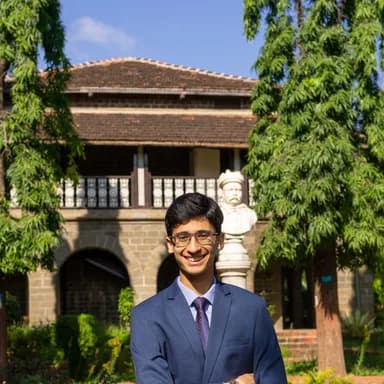
Package
23.5 LPA

Package
18.4 LPA

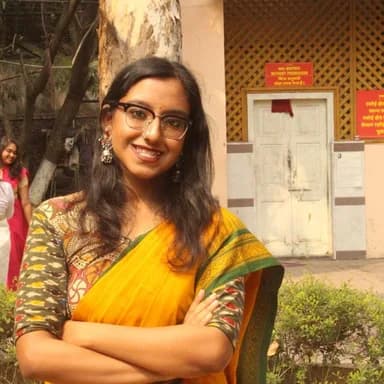
Package
10.78 LPA

Package
13 LPA



Learn from Leading Economists & Researchers
Teaching Faculty
Guided by experienced academicians, economists, and policy researchers who bring together academic depth and real-world expertise. Faculty members actively engage students through interactive lectures, mentorship, research guidance, and policy-oriented discussions that encourage critical thinking and analytical learning.

Life Through a Student’s Perspective
A glimpse into life at our campUS
 Batch 2025
The M.Sc. General Economics program at Gokhale Institute provides a strong foundation in economic theory, data analysis, and policy-making. The curriculum is well-structured, combining classroom learning with practical applications. Faculty members are highly knowledgeable....
 Batch 2025
The M.Sc. Economics program at GIPE offers a well-structured curriculum that blends theoretical concepts with practical applications. Over two years, it covers key areas like Microeconomics, Macroeconomics, Public Policy, International Trade, and Econometrics,...
 Batch 2025
The M.Sc. Economics course immerses us in the depths of theory while providing a thorough understanding of real-world phenomena. A perfect blend of quantitative and qualitative subjects equips us with the right tools to work efficiently and interpret results and insights across....

Life at Gokhale Institute
Where Academic Rigor Meets Campus Community


Explore Other Programs
M.Sc. Economics
M.Sc. Economics (Financial Economics)
M.Sc. Economics (Agri Business Economics)
M.Sc. Economics (International Business Economics & Finance)
M.Sc. Economics (Population Studies and Health Economics)
M.Sc. Economics (Public Policy)
M.Sc. Economics (Geo-Politics and Geo-Economics)
M.A. (Economics)
M.A. (Development Administration) (CPTP)